



In a time where external pressures and debate exists for and against ESG’s role in corporate strategy, the approach to sustainability reporting continues to undergo significant transformation.

The landscape of SEO has undergone such a significant transformation that having an AI SEO strategy is now table stakes. Here’s how to get started.

If you haven’t yet developed a strategy for Google search’s integration with generative AI – aka Search Generative Experience (SGE) – there’s still time.

While deeply understanding a niche market like manufacturing is foundational, it is the combination of this knowledge with an award-winning team’s expertise that truly drives success.

Creative B2B marketing campaigns aren’t just for consumer-focused industries anymore. Here’s how we adopt a B2C mindset for our B2B marketing clients.
By thoughtfully weaving AI into your marketing strategies, you can ensure they are resilient, responsive and ready to meet the challenges ahead.

Not all industries are created equal when it comes to marketing budgets

In Part 1, we unpack what you can do today about getting your house in order.

By understanding the capabilities and potential concerns surrounding Chat GPT and other AI technologies, we at Savage Brands are committed to helping our clients harness the power of AI in digital marketing responsibly and effectively.

Our team shares its firsthand GA4 transition thoughts as we adjust to a new Google Analytics platform and anticipate the sunsetting of Universal Analytics.
In any industry, it is important to understand tools and adopt new technologies and resources.

The digital marketing landscape is quickly evolving and top marketers around the world are asking the same questions.
Every business benefits from improved local search rankings.

We live in a digital world where information is in the palm of our hands.

Leaders have a tough time attracting and retaining good talent today.

Real connection needs empathy, and when we can convey our feelings correctly, we can build connections easier.

Working remotely, or a hybrid model combining both in-office and from-home work, is here to stay.

This article is co-written by Care Gerland & Andrew Peng


Empathy in the design process makes sure that we honor every person who may interact with our work to assure that it is accessible for them.

Most of us don’t set out to offend, but are our unconscious biases impeding our ability to see how we are perceived by others?

Branding requires a significant investment of time, budget and resources.
A strong brand experience is imperative in today’s competitive, crowded business climate.

The commoditization of branding and marketing has been going on for years.

The metaverse jetted into the collective convo late last fall when Facebook announced a name change to Meta.

Companies are spending a lot of time, money and effort to develop ESG strategies and targets.

ESG reporting is a communication channel where you can showcase who you are and what is important to you.

Changing a culture is rooted in changing behaviors and stories.

If you can take these simple steps in developing your ESG strategy you’re well on your way to solidifying a stakeholder network that is invested in your success.

This article was co-written by Sydney Isaacs & Lisa Pham of Abernathy MacGregor and Bethany Andell of Savage Brands

While some companies still print their sustainability reports (a contradiction in sustainability practices, we must say), more and more are moving to an online presence.
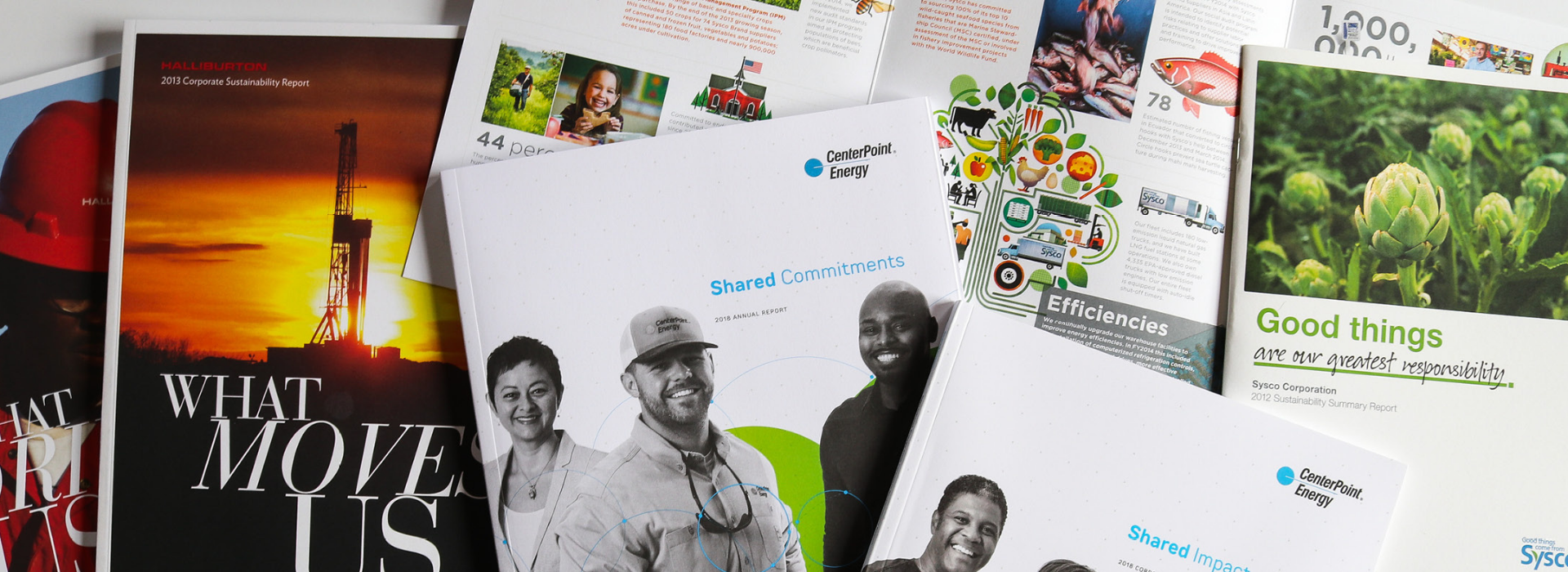
Environmental, Social and Governance (ESG) analysis can help you to identify risks and opportunities for growth.

How can you keep Environmental, Social and Governance (ESG) top of mind when there are other priorities?

ESG work is a very aspirational and inspirational undertaking, and as such, deserves to be talked about in aspirational and inspirational ways.
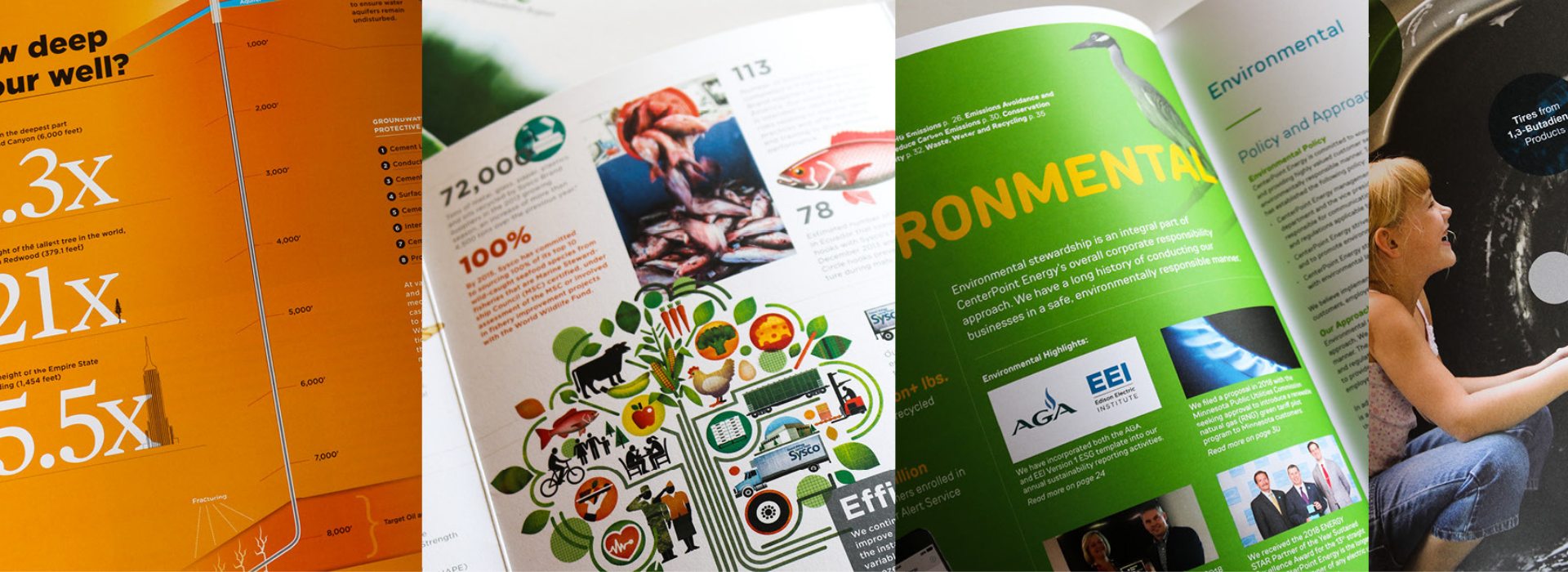
ESG performance has become vital for businesses in recent years.

As stakeholders press organizations to lead the change in society’s greatest problems, company executives are considering reporting their environmental and social performance as much as they report their business performance.

Creating a sustainability report (SR) takes significant efforts from multiple content authors and subject matter experts across your organization. After it is done, you will be flush with content that can be used in a variety of ways to further your business.

Once your environmental, social and corporate governance (ESG) strategy is aligned to your organization’s purpose and values, you need to ensure it is understood, believed and lived.

Sustainable investing and shareholder activism set new expectations for companies in society.

In the world of sustainability, data is king. Environmental, Social and Governance (ESG) reporting is highly complex and finding ways to make it simple and easy to understand is imperative when a range of stakeholders with varying levels of comprehension about your industry are looking at you.

Creating a compelling purpose statement is both an exciting and daunting task.
Creating a purpose statement is an intense endeavor.

Many leaders are getting curious about the power purpose possesses to transform their organizations.
The failure rate for mergers and acquisitions (M&A) sits between 70 percent and 90 percent.

Your values aren’t enough to inform how people are supposed to act in your organization.

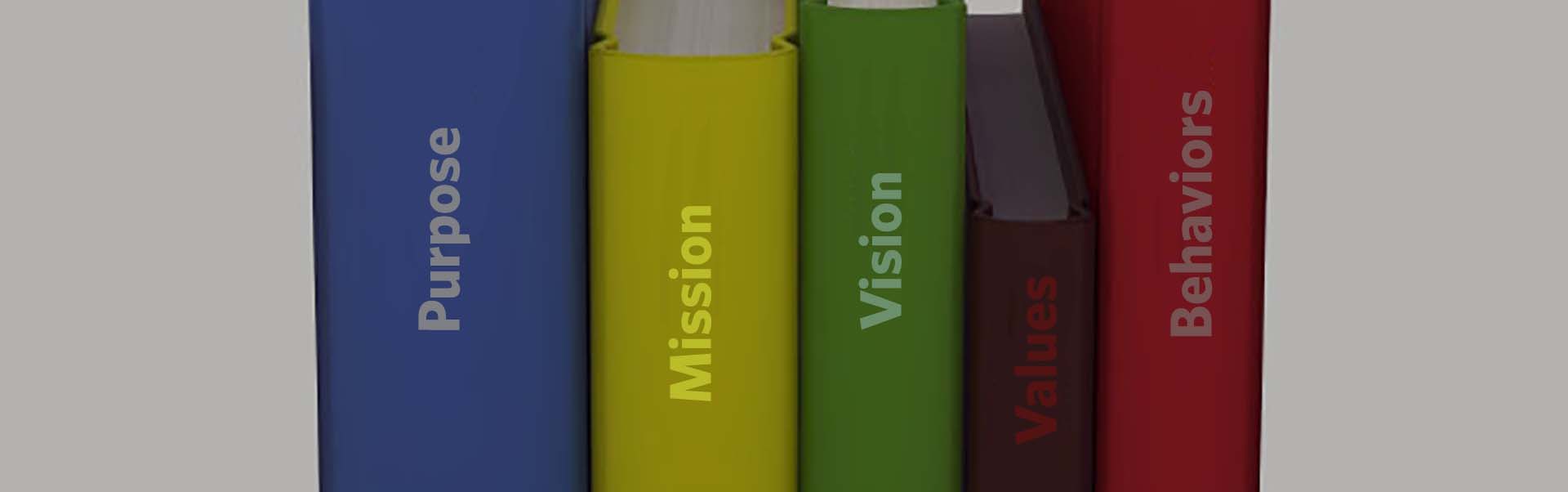
When you commit to leading with purpose, your traditional “mission, vision and values” statements must shift.

Culture drives everything you do in your business and, in order to meet the objectives you have set out for yourself, it’s imperative that those who work for you are clear on the kind of culture you seek to create.

As the outward-facing aspect of your business, your brand must make clear what your organization cares about and reflect what it stands for.

Purpose is the lynchpin for building an engaging and lasting brand or culture; and every business needs one.

Values are a critical element to a brand or culture’s foundation.
We believe that in any effort, where one starts has everything to do with where one ends up.

As our organizations develop and as our beliefs about the role of business evolve, our Foundational Statements may need to change.
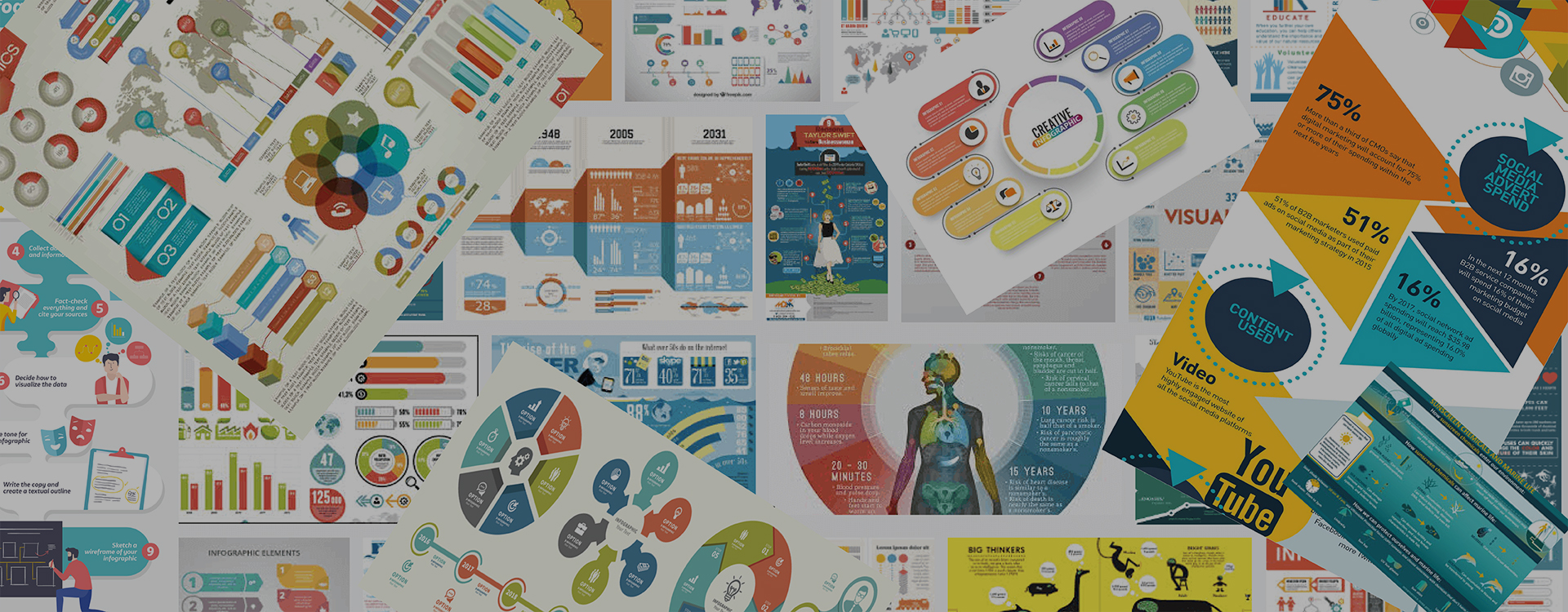
As our conversations have kicked off with clients regarding improvements for their annual and sustainability reports, common needs have emerged:
If you went into remote work with a not so great culture, that has probably followed you. But it is never too late to start working on making it better.


All businesses are trying to save time and money, and do more with less.

The last six months have prompted leaders to rethink their customer sales experiences.
Leaders we work with are concerned about how to address the realities of today’s remote and virtual world,

I recently had someone ask me, “What’s your favorite part of a project/engagement?” “Oh, that’s definitely got to be the…well…hmm,”

Marketing messaging during a crisis requires tact. Use the pandemic as an opportunity to build trust. Learn how to reframe messaging to elevate your brand.

In a time of crisis effective leaders are bolstered by purpose. Learn how purpose guides them in decision making, strategy and communications.
As the Corona virus endures, its impact on corporate work life becomes increasingly profound. In this new “virtual” reality, leaders must now switch from their initial survival mode to a model that releases the energy, creativity and motivation of their workforce. How can a sustainable post-Corona business model be developed?
Learn why you need intentional culture that is values- and behaviors-based for a virtual and remote work environment.

How do you keep culture continuity when your whole workforce is at home?

As I write this, the Houston Astros are fresh off of hiring a new manager.

Two cups of coffee, a few clicks of the mouse and BAM! – analytics that’ll blow your boss’ socks off, complete with context, emphasis and emotion displayed so you don’t have to add, “you had to be there” to the end of your marketing report.
Ah, yes. If only it was that easy.
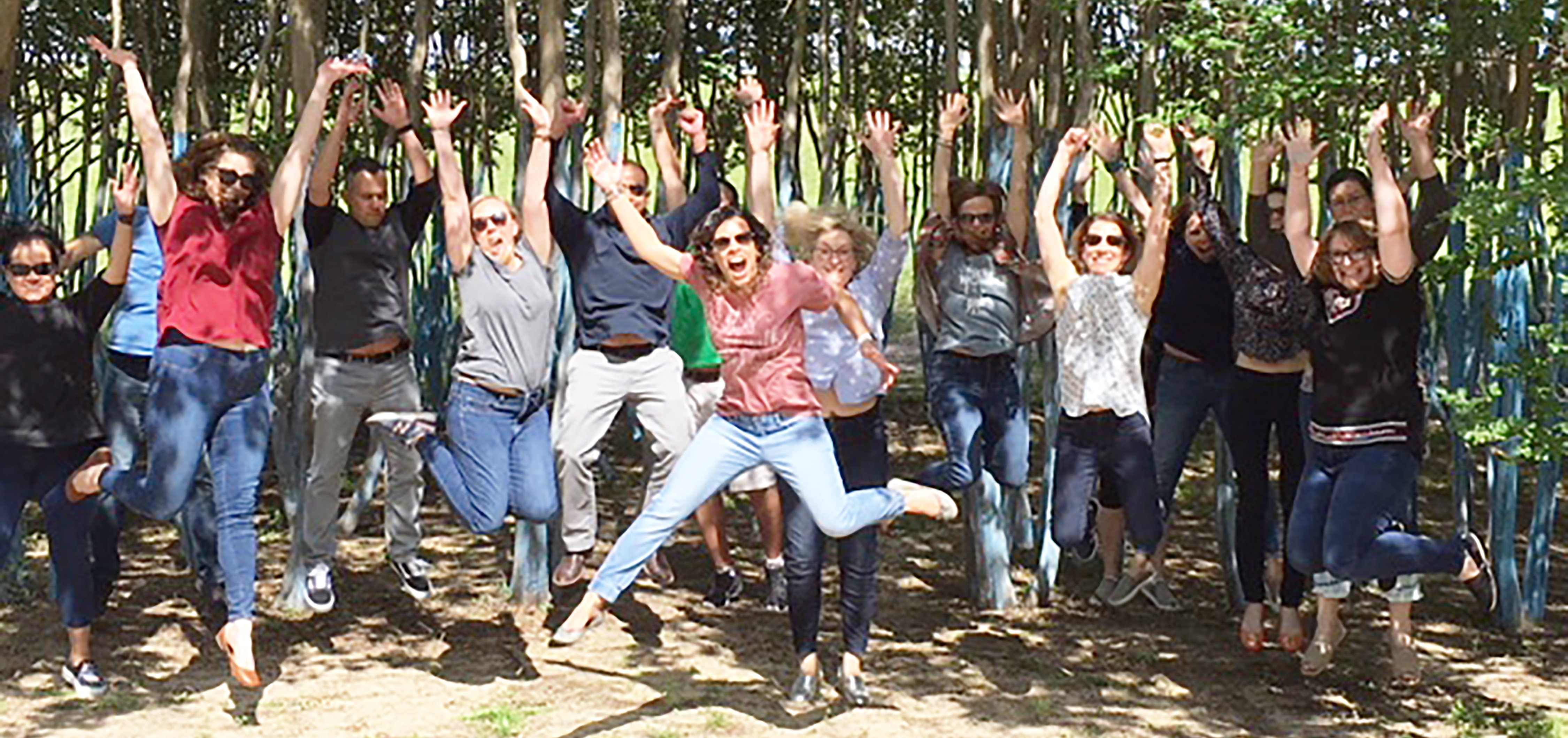
In late 2018 we began having conversations around our focal point for 2019.

Recently 181 CEOs of the Business Roundtable released a new statement, “The Purpose of Business”.
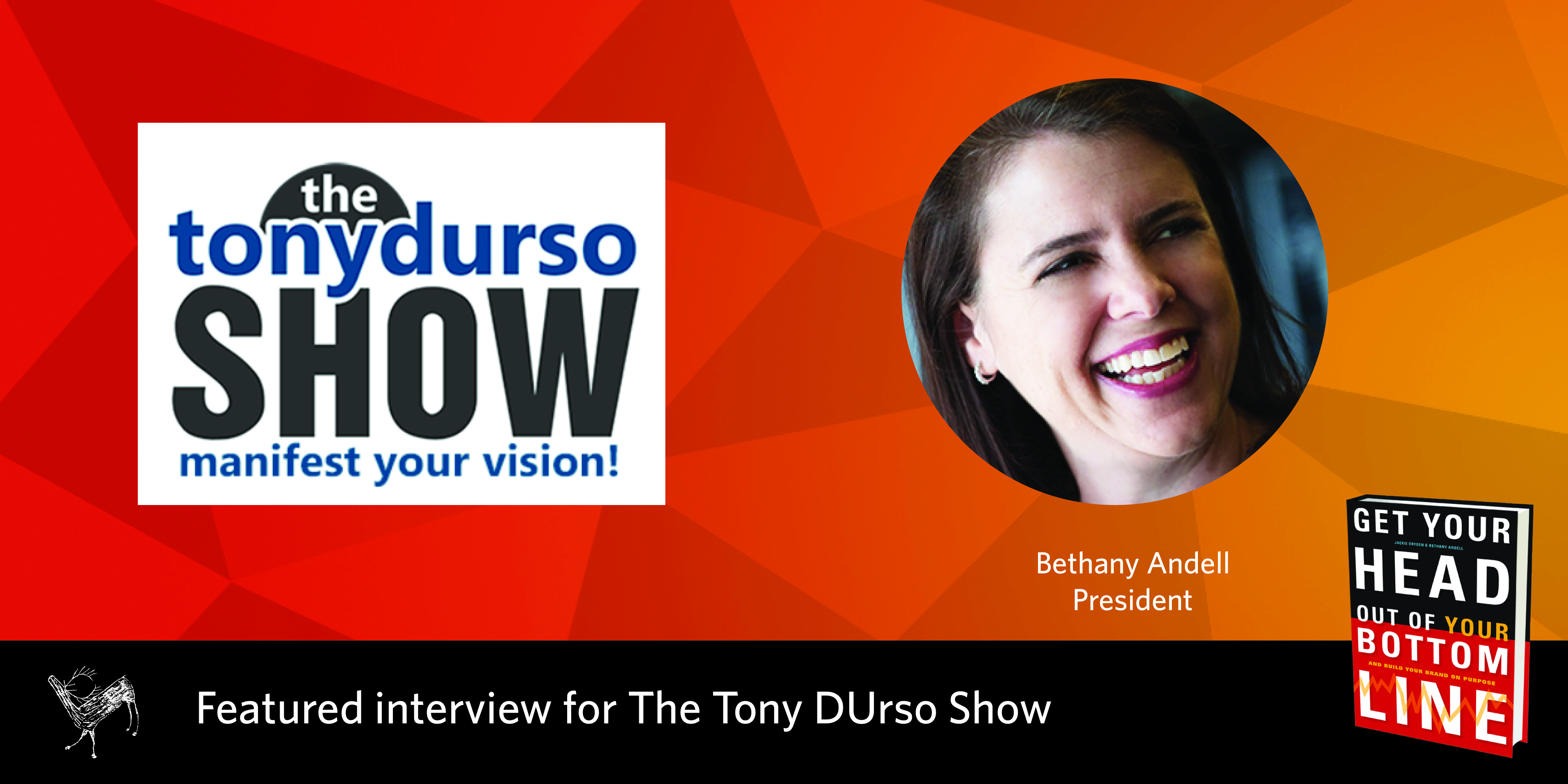
Bethany talks to Tony about the importance on not only articulating your purpose but making sure every decision in your business feeds it.
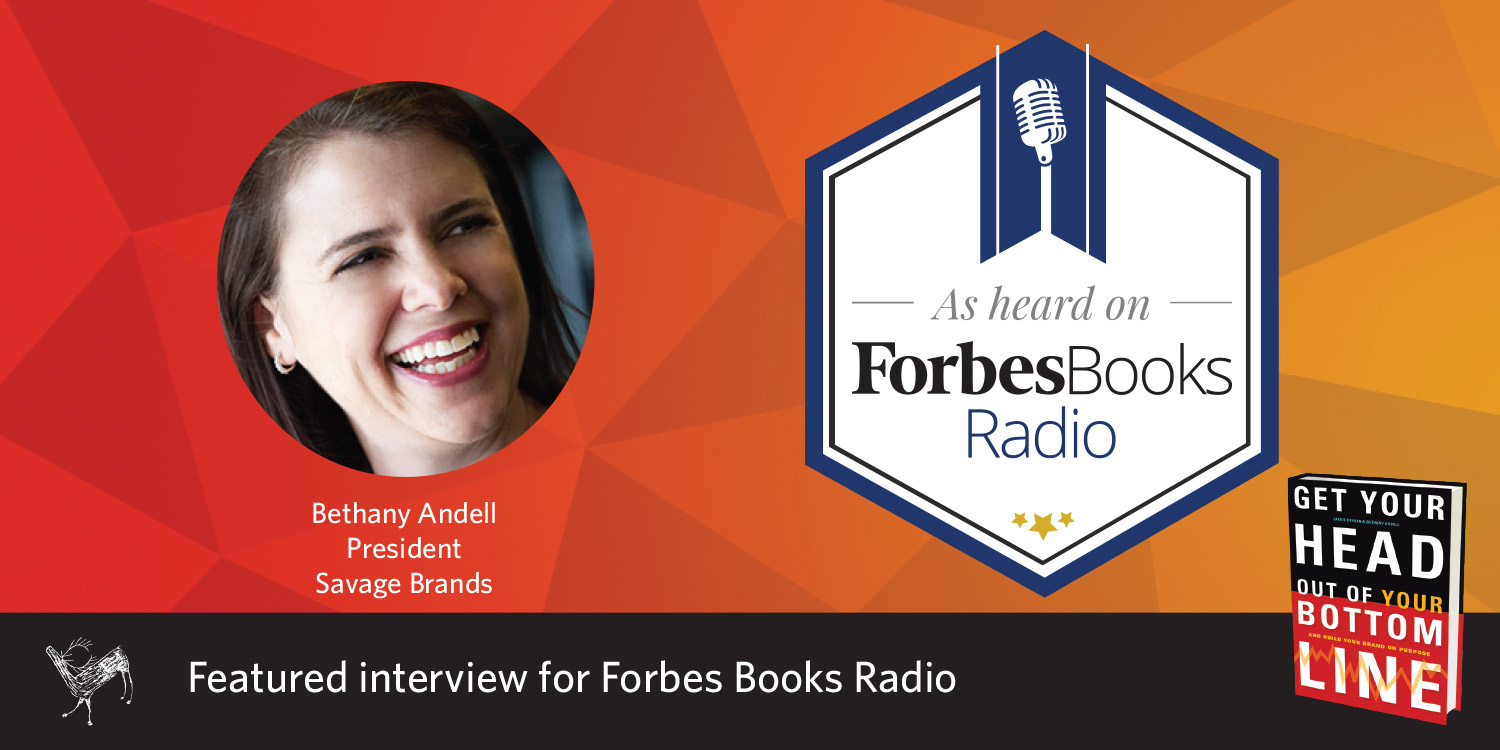
Bethany had a chance to talk to the team at Forbes Books Radio on how purposefully she changed the trajectory of Savage Brands.
We love the opportunity to showcase our AAF-Houston members, and this interview with Jackie Dryden is a lesson in getting your brand out there, so it’s understood, believed and your brand advocates are telling everyone.
Listen to Bethany’s conversation on how to help companies uncover their purpose and align it with their operations, culture, and brand to achieve enduring success and lasting relationships on the Dov Baron Leadership and Loyalty Podcast.

You know the feeling: You’ve just left a meeting in which everyone has discussed a pressing issue, considered the pros and cons, and arrived at a plan for moving forward that everyone can agree with.
Watch Bethany answer some tough questions on power and money for WatchHerWork.
Watch Jackie answer some tough questions on career transitions, office dynamics, and believing in your creativity for WatchHerWork.

The 2018 Conscious Capitalism Annual Conference was chock-full of inspiring speakers. Themes ranged from recovering from failure to building sustainable, profitable companies with the greater good in mind. The themes that most resonated with me were centered around connection and purpose. They are captured here as reminders and inspiration for us all.
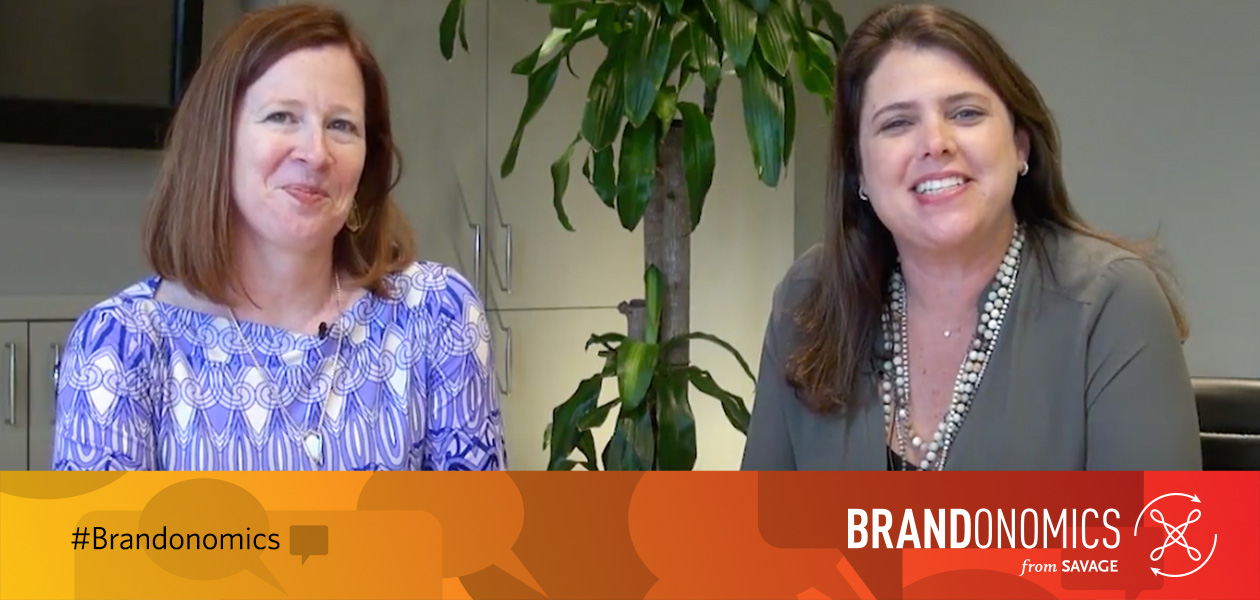
Bethany Andell talks to Laura Richardson of Frazer about how she leads by example. Laura explains how as a leader you cannot be afraid to open up about failure, as it leads to trust.
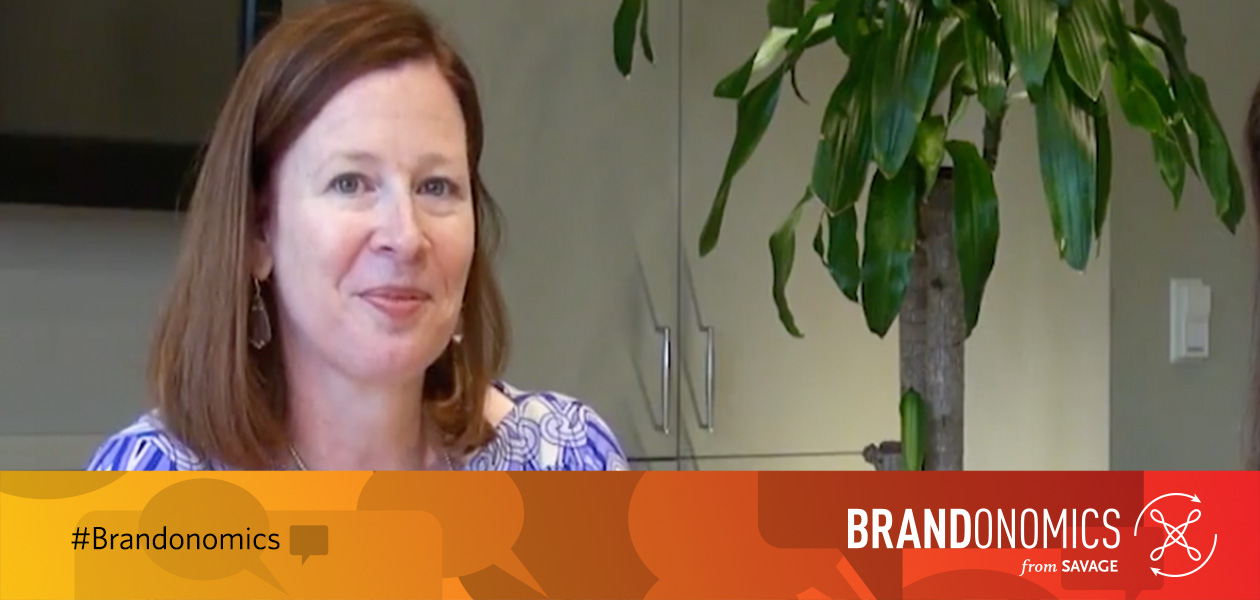
Bethany Andell is discussing values with Laura Richardson of Frazer. Laura talks about how they arrived at their core values and how she uses humor to remind everyone to have fun.
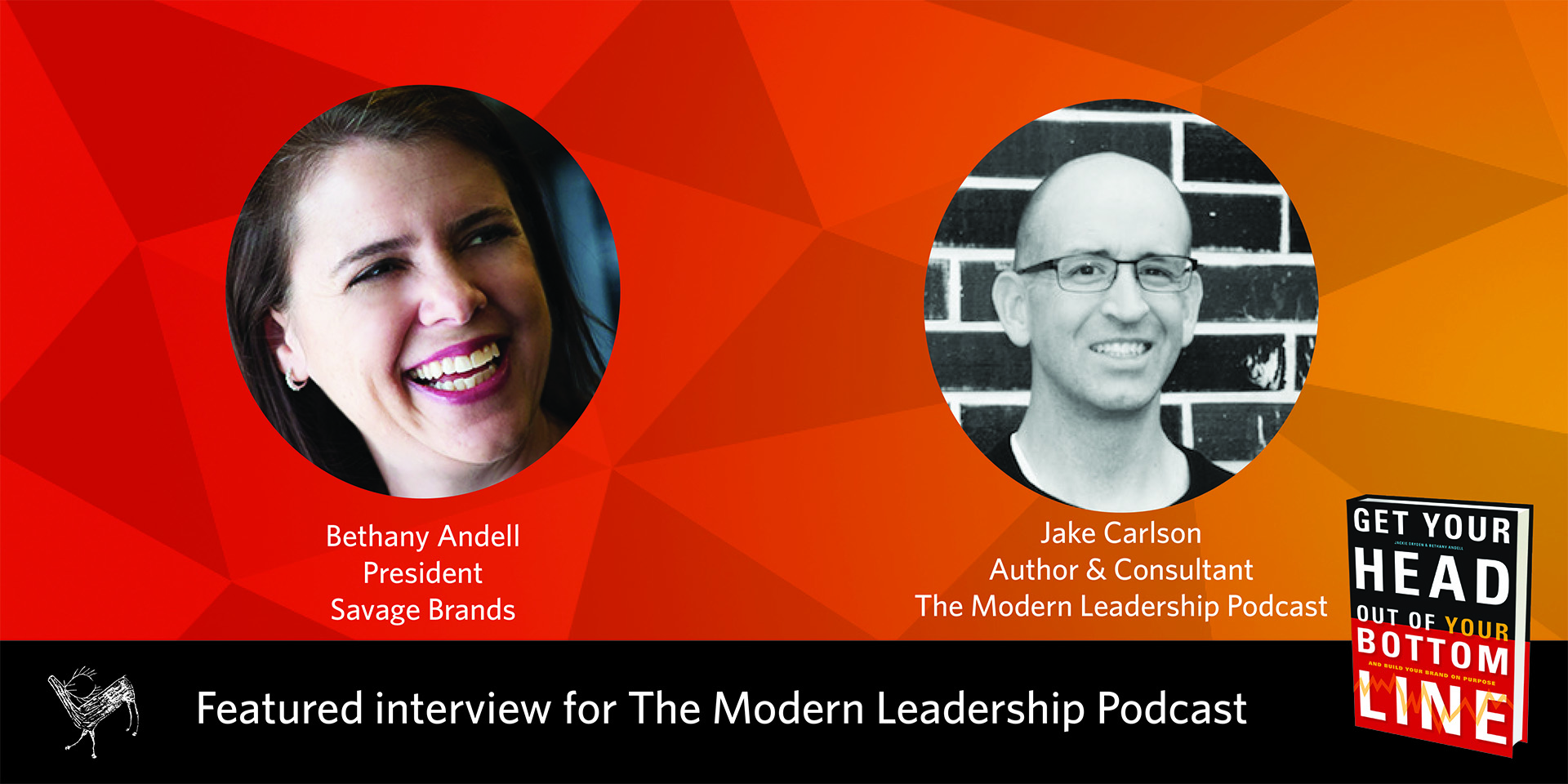
Listen to Bethany’s conversation on conscious leadership and building a culture on purpose on the The Modern Leadership podcast.
Bethany Andell talks with Laura Richardson, CEO of Frazer, about purpose. Laura talks about the unintentional culture of her grandfather’s company and explains how they unleash the potential of every employee at Frazer.

It is an absolute requirement to be the steward of your organization’s purpose and live out the values you claim.
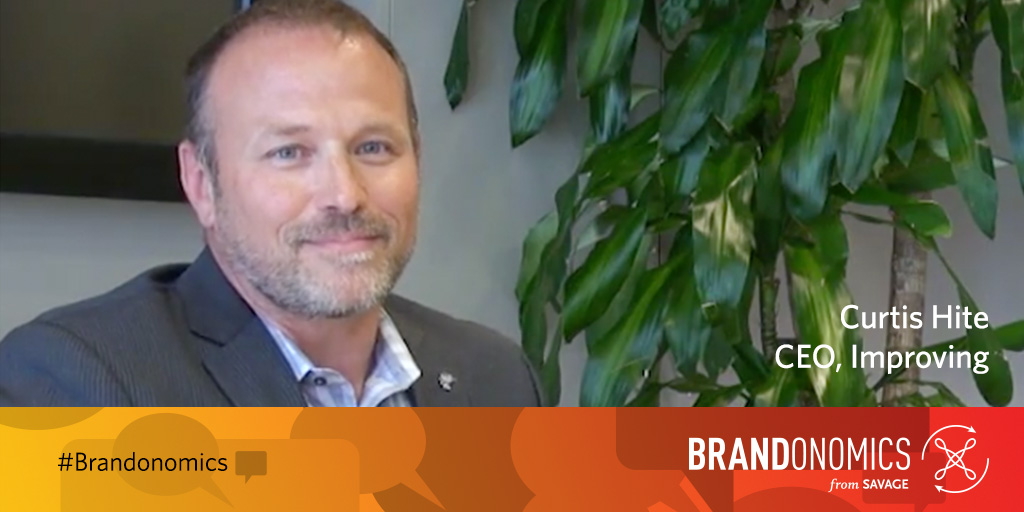
Bethany Andell is discussing values and purpose with Curtis Hite of IT services firm Improving. Curtis details success through involvement, a way to give recognition to employees going above and beyond. His is a point system that is getting amazing results.
Savage Brands’ Bethany Andell continues her discussion with Curtis Hite of IT services firm Improving. Curtis explains what he and his stakeholders are doing to rebuild trust in the IT community.
Savage Brands’ Bethany Andell interviews Curtis Hite of IT services firm Improving. Curtis is building his brand with a culture based on the teachings of Conscious Capitalism as he seeks to rebuild trust in the IT community.

Listen to Jackie’s conversation on how companies build an authentic and sustainable organization and brand, on the Recalculating for Small Business show.

These are just some of the moments that struck me last week when I attended my 4th annual Conscious Capitalism Leadership Summit:

For companies in transformation due to rapid growth, strategic transition or M&A activities or those in need of revitalization due to poor employee engagement or lackluster business performance, having a solid business ‘operating system’ in place will likely make the difference between success or failure — enjoying a return on investment or realizing sunk costs — on the work that must be done to reach a vision.

While the specifics of how you craft your company story will vary there are several fundamental elements of purposeful communication that cross all channels and media. Begin by getting your arms around your authentic story, matching your narrative with your image, and then following through with flawless execution.

While most companies want tribal brand loyalty, many are unclear about how to create raving fans that believe in and support a company’s Purpose. Creating advocacy is a journey—belief and trust can’t be built overnight.

Lack of alignment between what is said and how a business operates will quickly derail any attempt to becoming a purposeful brand, and erode trust. Even the most devout believers in a company’s why will quickly become discouraged if the way a company conducts business does not match what it professes to stand for.

My friend Darcie Durham with Boeing hosted me at the Greater Houston Partnership leadership luncheon. The speaker was Indra Nooyi, the CEO of PepsiCo and it was moderated by Scott McClelland, President of HEB. I don’t hear much about “corporate” PepsiCo and before this talk I didn’t know much about Indra. However, what she had to say about leadership and building a sustainably successful company was so in sync with how I view the role of leaders in business today that I felt like we were kindred spirits.

What is it with these Millennials? Well maybe we aren’t all so different after all. While much is written about the “Millennial effect” on the workplace, when it comes to the shared mindset of purpose in the business environment, this is driven not by one, but by two generations at opposite ends of the career spectrum—Millennials and Baby Boomers.
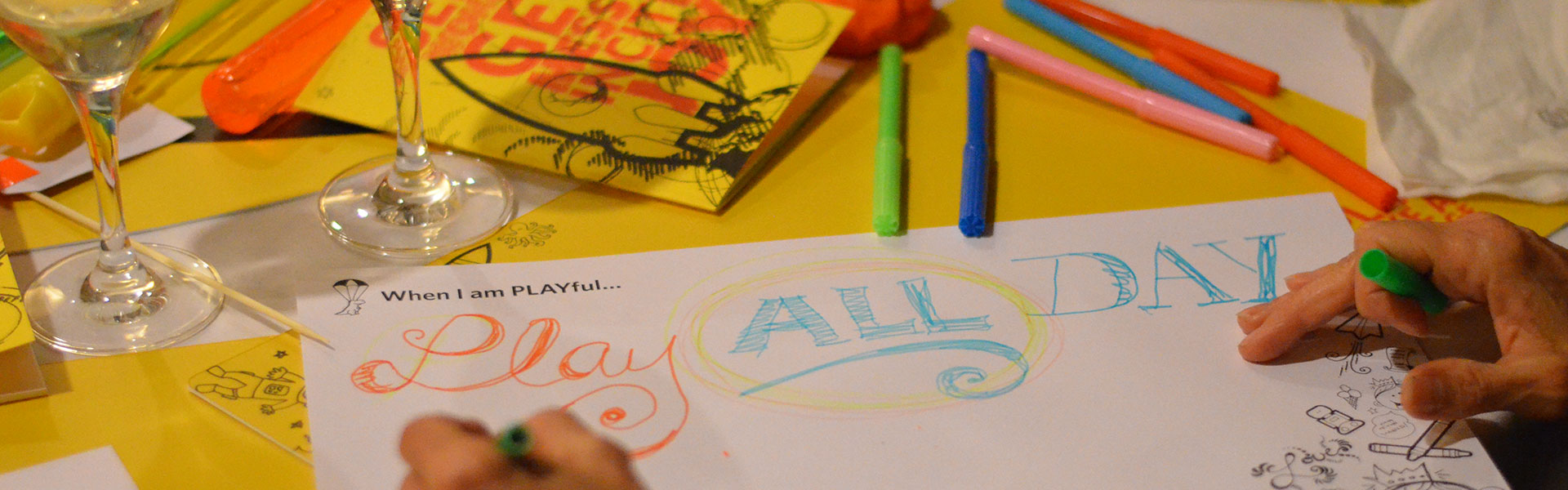
Savage introduces an experience designed to help you tap into the positive powers of play—and to reconnect with your true purpose.

Having a mission statement is more than a declaration of a company’s intent. A mission statement should be memorable, invoke inspiration, and call the audience to action. But having a mission statement and living it are entirely separate things.
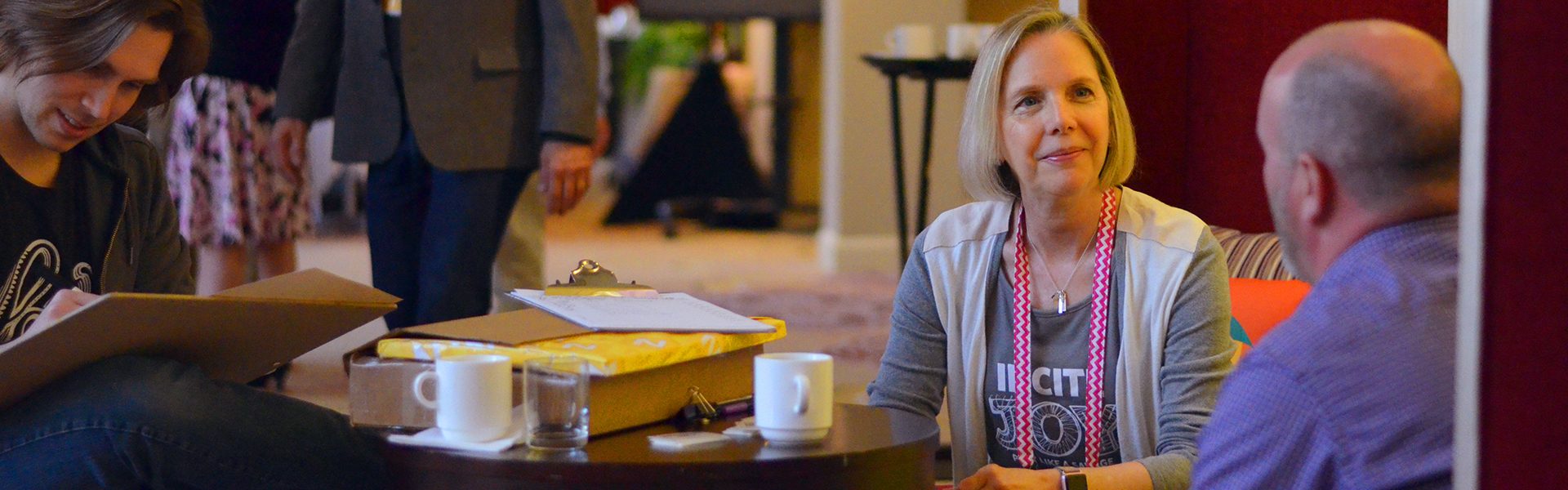
One of my favorite ad headlines states, “You don’t open a Bike Shop to Run a Balance Sheet.” You open a bike shop because you love bicycles. You are passionate about riding them, talking about them and sharing them with others. This is how most great businesses are started. Someone with a personal passion recognizes a need in the marketplace, takes a risk and starts a company to share their vision with the world.
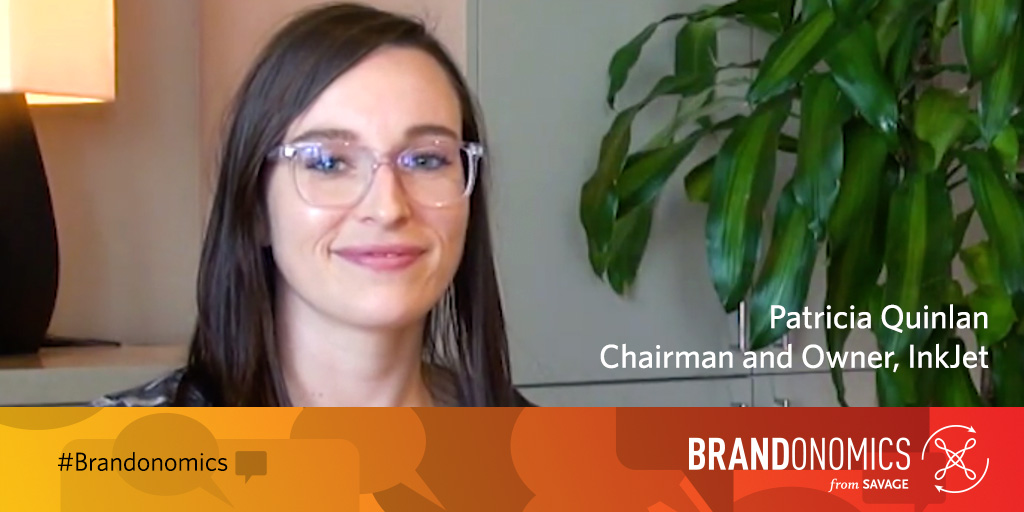
What happens when you have mad scientists on staff? Just check the manifesto. (The magic is not only in the ink.) Savage’s Bethany Andell continues her visit with Patricia Quinlan, chairman and owner of InkJet Inc.
Purpose and behavior can bring a company’s values to life. Are your employees advocates for your brand? Savage’s Bethany Andell continues her visit with Patricia Quinlan, a maverick spirit who is also chairman and owner of InkJet Inc.
There are many ways to make a company successful. At InkJet, mission, vision and values are purposeful to the tribe and critical to the individual. But what is the benefit of doing this? As it turns out, every company has many different stakeholders, and the common ground for all starts with connecting around purpose. Savage’s Bethany Andell interviews Patricia Quinlan, a maverick spirit who is also chairman and owner of InkJet, Inc.

A few weeks ago I got to attend my first Conscious Capitalism Conference in Philadelphia, PA. As a designer and an introvert, I wasn’t sure how much I would get out of it personally, but I was so excited for the opportunity to promote the Savage way and support fellow Savages.
In preparation for Conscious Capitalism 2017 in Philadelphia, Savages attending the conference had the opportunity to define what “play” personally meant in a workshop with Corey Blake at Round Table Companies.

This was not a question most people expected to be asked at the 2017 Conscious Capitalism Conference in Philadelphia. But from the moment people sat down in the big comfy armchair to get their caricatures drawn, they knew something was different.
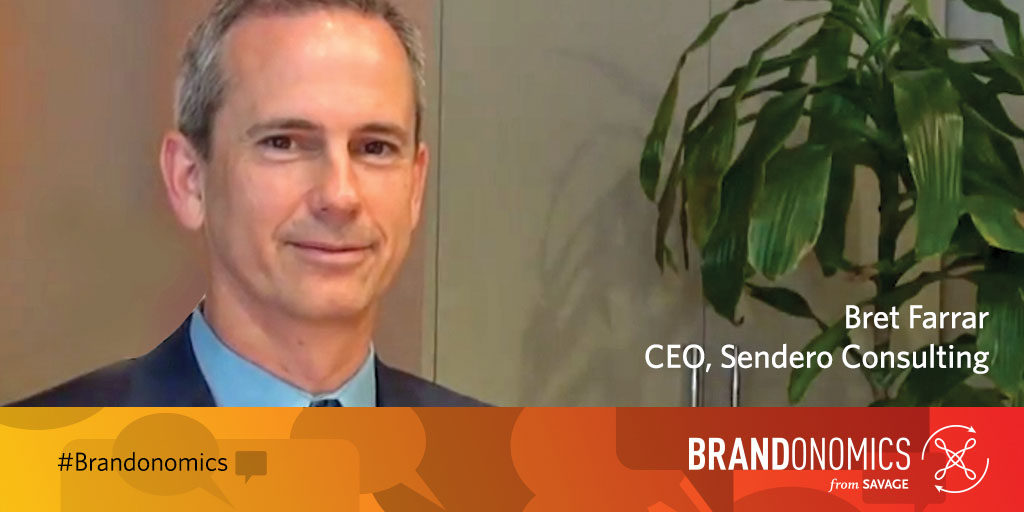
Values rooted in passion and a strong purpose offer a winning combination for his company, and for their clients. Bret Farrar is back. The CEO and founding partner for Sendero Consulting visits with Savage’s Bethany Andell.
The CEO and founding partner for Sendero Consulting visits with Savage’s Bethany Andell to talk about the importance of having strong core values, and then demonstrating them everyday.
Inspired people engaged to work together towards a common purpose. That’s what you’ll get at the 2017 HR Houston Gulf Coast Symposium, Savage will be on hand to help you “Stand Out” with our hosted Unique Session. These interactive sessions offer the opportunity to personally participate and walk alway with greater learnings.
Conscious Capitalism 2017 is designed to deepen your practical application of the principles of Conscious Capitalism with high potency keynotes, new content for teams, multiple tracks of hands on practicums and rich opportunities to connect with and learn from peers.
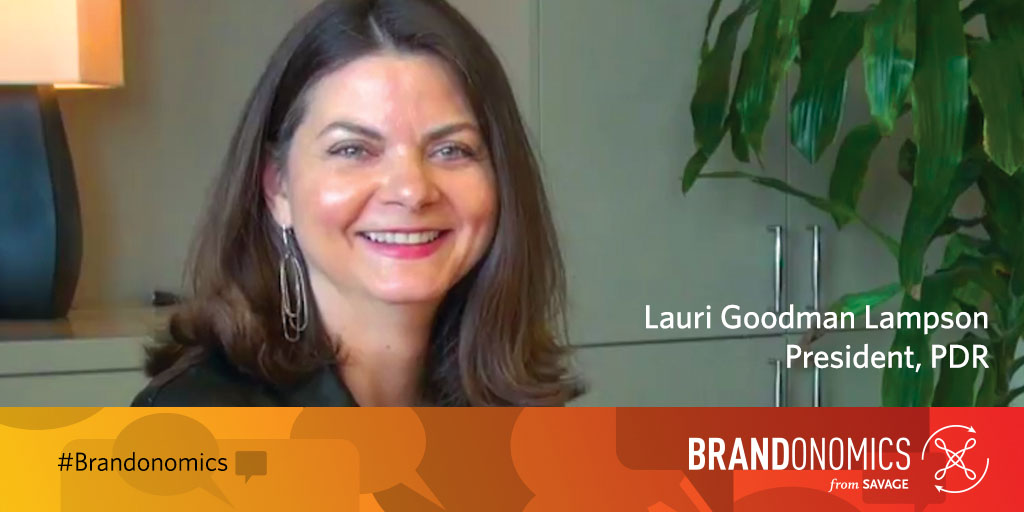
If you want to attract and hire good talent, your workplace user experience will be a factor. Bethany Andell continues her discussion with Lauri Goodman Lampson, president of PDR, a workplace consulting and design firm.

It’s a new world out there and the way we work is changing. Today’s workforce does not need a “warehouse,” it needs a “hub” of connections and collaboration. What’s a leader to do? Savage’s Bethany Andell asks Lauri Goodman Lampson, president of PDR, a workplace consulting and design firm.
How do you get maximum energy from your employees? Is it about purpose, and where does strategy fit in? If you’re doing it right, it all works together as it connects and inspires. Savage’s Bethany Andell chats with Lauri Goodman Lampson, president of PDR, a workplace consulting and design firm.
Your executive team is a key stakeholder group in any rebrand process. The key here is to include them and to follow a strategic process. Why? Because you can’t solve big brand fragmentation challenges just by having a team work on the tactics – a new logo, or a new website. Robin Tooms interviews Chris Levy, Global Marketing Director at Quest Integrity, for ways to keep this process on track.
Budgets are tight, so wouldn’t you want to make sure your ad dollars are hitting your intended audience? Myles Rose, Digital Marketing Operations Manager for Gulf States Toyota shares some digital marketing tips to keep your ad buys safe and secure.
It’s all about culture and values. Does your brand platform deliver yours? Robin Tooms gets specific with Chris Levy, Global Marketing Director at Quest Integrity.
Marketers are concerned about omnichannel marketing, but this brings about new integration challenges, such as ‘what happens with the data on the backend?’. When you have the ability for your various systems to share data, such as with a Data Management Platform (DMP), you can better ‘connect the dots’ with all interactions. Myles Rose, Digital Marketing Operations Manager for Gulf States Toyota shares some insights from the Google Performance Summit and how Google is playing a friendlier role in a DMP.
Multiple brands, bundled solutions, corporate strategy, and rebrands can create chaos on so many levels. And where is the customer in all of this? Robin Tooms asks Chris Levy, Global Marketing Director at Quest Integrity Group.
How does a non-profit take on a huge, complex campaign and do it with limited resources? Very creatively! Robin Tooms interviews Lisa Gagnon, vice president of marketing for the 2017 Houston Super Bowl Host Committee.
Branding challenges for a fast-growth company can be complicated on many levels. Where do you start? Robin Tooms asks Chris Levy, Global Marketing Director at Quest Integrity.
Why would a company want to spend money on something like a Data Management Platform (DMP)? (Hint: because working from insights means that your ad dollars are hitting the right people.) Robin Tooms talks DMP with Myles Rose, Digital Marketing Operations Manager for Gulf States Toyota to hear about one way companies counteract this challenge.
We’ve all heard about how important it is to be thought leaders in our industry, but this is easier said than done. See how IHS has shaped strategic conversations at its CERAweek conference. Robin Tooms gets the whole story when she hosts Shavonnah Schreiber, director of global campaigns and events at IHS, Inc.
What is a Data Management Platform (DMP) and how do you use it? Robin Tooms talks about why this is more than marketing’s next “shiny object” with Myles Rose, Digital Marketing Operations Manager for Gulf States Toyota.
Savage Brands’ President, Bethany Andell and Chief Purpose Architect, Jackie Dryden were interviewed by PKF Texas for their series, “The Entrepreneur’s Playbook®” in a series of conversations on Using Savage Thinking to Lead with Purpose.
Logos are challenging because you have to get across the core essence of your brand in just a few marks. And this challenge is even greater when the audiences are broad. So how do you appeal to the many audiences of the Super Bowl while keeping the core idea of excitement? Robin Tooms asks Lisa Gagnon, vice president of marketing for the 2017 Houston Super Bowl Host Committee.
Robin Tooms hosts Shavonnah Schreiber, director of global campaigns and events at IHS, Inc. to talk more about account-based marketing and how to execute on this approach.
Savage Brands’ President, Bethany Andell and Chief Purpose Architect, Jackie Dryden were interviewed by PKF Texas for their series, “The Entrepreneur’s Playbook®” in a series of conversations on Using Savage Thinking to Lead with Purpose.
It’s the Super Bowl—sponsors, brands, the NFL, the community, the fans—so many stakeholders! Robin Tooms asks Lisa Gagnon, vice president of marketing for the 2017 Houston Super Bowl Host Committee about the different audiences they keep in mind with the brand.
Savage Brands’ President, Bethany Andell and Chief Purpose Architect, Jackie Dryden were recently interviewed by PKF Texas for their series, “The Entrepreneur’s Playbook®” in a series of conversations on Using Savage Thinking to Lead with Purpose.
What is account-based marketing and how does it work? Robin Tooms asks Shavonnah Schreiber, director of global campaigns and events at IHS, Inc.
Savage Brands’ President, Bethany Andell and Chief Purpose Architect, Jackie Dryden were recently interviewed by PKF Texas for their series, “The Entrepreneur’s Playbook®” in a series of conversations on Using Savage Thinking to Lead with Purpose.
Two brands for the upcoming 2017 Super Bowl hosted in Houston. Why? Robin Tooms asks Lisa Gagnon, vice president of marketing for the 2017 Houston Super Bowl Host Committee for her perspective on why the Host Committee has an additional logo.
Is it possible to be MORE strategic in how you market services, solutions and expertise? And how do you know you’re still on point? Robin Tooms gets specific with Shavonnah Schreiber, director of global campaigns and events at IHS.

We’re creators. We’re dreamers. We’re shapers and shakers. We’re high-five collectors and truth slingers. We’re believers in a better world. We are Savage Brands.
A huge initiative like the NCAA Men’s Final Four means lots of branded events – with each event offering a different value for specific demographics. That’s a lot of targeted marketing! Robin Tooms visits with Rachel Quan, VP of external operations for the 2016 NCAA Men’s Final Four in Houston.
The 2016 NCAA Men’s Final Four Houston Local Organizing Committee is in full blitz mode, especially now that Rodeo is over. Robin Tooms interviews Rachel Quan, VP of external operations for more insight on how they manage their media dollars to drive attendance.
In January at the World Economic Forum in Davos, Facebook’s COO Sheryl Sandberg proclaimed, “Men still run the world…I’m not sure its going that well.”
It’s not just a game or two, it’s a total EVENT (and so much more)! Robin Tooms interviews Rachel Quan, VP of external operations for the 2016 NCAA Men’s Final Four Houston Local Organizing Committee to talk about how she built excitement within Houston so that we benefit as a community.
Coordinating thousands of volunteers requires a massive effort, a strong strategy and detailed communications. Robin Tooms interviews Rachel Quan, VP of external operations for the 2016 NCAA Men’s Final Four Houston Local Organizing Committee.
In their most recent edition on newsstands, Wealth Management magazine released an intriguing story on the gradual decline of physically printed annual reports published by publicly traded companies.
Nonprofits have unique needs around communicating with volunteers and donors to help drive support for their programs and those needs, in turn, can present specific messaging opportunities. Robin Tooms interviews Thao Costis, CEO of SEARCH Homeless Services.
When a brand name can paint a picture for your organization’s purpose, it creates a platform for conversations, and helps to guide the way you tell your brand story. SEARCH has a great name in House of Tiny Treasures, and Robin Tooms interviews Thao Costis, CEO of SEARCH Homeless Services to learn why.
What’s in a name—other than a brand challenge? Robin Tooms interviews Thao Costis, CEO of SEARCH Homeless Services.
Moving up is always a positive. For Houston’s SEARCH Homeless, it’s especially meaningful. Robin Tooms interviews Thao Costis, CEO of SEARCH Homeless Services.
Do brands—even innovative ones—need updating? Can a good brand really get stuck with an outdated perception? Steve Lufburrow, President and CEO, Goodwill Houston answers all in his interview with Robin Tooms.
If you sell an intellectual product (that’s focused around people and expertise), how does that change your approach to building a brand? Robin Tooms visits with David Skinner, CEO of KCA, an energy consulting firm focused on technology and strategy.
What’s the best way to celebrate a 70-year-old brand? Consistently live the mission, of course! Robin Tooms interviews Kym King, Vice President of Public Relations at Goodwill Houston.
As an autonomous part of Goodwill Industries, an international organization, each local group has a certain responsibility to protect the brand. Robin Tooms interviews Steve Lufburrow, President and CEO, Goodwill Houston.
Should branding and corporate strategy be aligned? We think so. Robin Tooms visits with David Skinner, CEO of KCA, an energy consulting firm focused on technology and strategy.
Even in my groggy morning stupor, I couldn’t help being curious about the graphic posters lining my route to work. “Save the Tamales from Ronald McDonald,” they read. The posters looked almost political in nature – black with an iconic fist raised into the air, grasping a — tamale?
Managing partnerships takes work, nurturing, focus and constant reassessment—somewhat like a marriage. Robin Tooms talks celebrations and analogies with Audrey Trevino, Global Branding Manager at MD Anderson Cancer Center.
Can an international brand help the local affiliate? Under the right circumstances, it can add tremendous benefits. Robin Tooms interviews Kym King, Vice President of Public Relations at Goodwill Industries of Houston.
A new study by CompTIA on cybersecurity habits in the workplace shows that careless employee behaviors around technology are the biggest threats to information security in organizations.
Is your brand thinking about innovative ways to communicate and connect with your audiences? Robin Tooms interviews Steve Lufburrow, President and CEO, Goodwill Houston to discuss how Goodwill has used music, and music partnerships, as a powerful communications tool.
Global branding with partners adds several levels of complexity that must be understood. Robin Tooms interviews Audrey Trevino, Global Branding Manager at MD Anderson Cancer Center to talk about finding those great brand partner matches.
Professional services firms have unique challenges around differentiating themselves; setting both the thought leadership and the relationship strategies in place. Robin Tooms chats with David Skinner, CEO of KCA, an energy consulting firm focused on technology and strategy.
Being the keeper of a 70-year-old brand is a big responsibility; one that comes with its own challenges. Robin Tooms interviews Kym King, Vice President of Public Relations at Goodwill Houston to talk about how brands can better communicate mission and purpose to connect with customers and create action.
How does a brand stay strong, and relevant, over 70 years? Robin Tooms interviews Steve Lufburrow, President and CEO, Goodwill Houston to discover how the organization continuously builds upon its brand platform.
HOUSTON – (Sept. 28, 2015) When Savage Brands Design Director and Principal Doug Hebert attended a concert by Pearl Jam front man Eddie Vedder, he expected to enjoy his favorite singer and a fantastic show. He got much more when Vedder inspired him to help make a difference in the lives of people battling a devastating and rare skin disease—Epidermolysis Bullosa (EB).
Extending your global reach is a good thing but it also creates many moving pieces. Audrey Trevino, Global Branding Manager at MD Anderson Cancer Center, talks about how branding has positively affected their partnerships worldwide.
As a company, Savage has been reading thought-provoking books and discussing them together, talking about how their insight might apply to our work. We recently finished Start with Why by Simon Sinek, which encourages people to take a step back to understand why we do what we do.
To be successful, your company needs to “dress for the job you want” by matching your naming strategy to your larger brand strategy. David Skinner, CEO at KCA, talks about how their name change demonstrates who they want to be as a company.
Robin Tooms interviewed Marian Davenport, executive director of Genesys Works – Houston, as guest host of The BusinessMakers Show. The two talked about how Genesys Works is benefitting Houston, both through its empowerment of at-risk youth and its benefit to its corporate partners.
Brand and marketing teams can and should think bigger. They can look for opportunities to support the business in broader ways, which in turn helps the business see value in the brand. Audrey Trevino, Global Branding Manager at MD Anderson Cancer Center, talks about how their team leverages branding to positively affect their partnerships worldwide.
Design is everywhere – and in more places than you probably realize. You recognize it in billboards and book covers, but it’s also in the architecture and décor of your favorite coffee spot, along with the napkins, coffee packaging, in-store signage and even what the barista is wearing.
There are only three possible strategies for your company to pursue — and as much as you may want to claim all three, you can only deliver one. Steve Brody, a Vistage International chair and President of Naviond US, shares his advice for leaders making strategic decisions.
The most successful marketing efforts aren’t preplanned. They come from experimentation and studying customer behavior. Steve Brody, current chair at Vistage International and President of Naviond US, shares why the best marketers understand that they operate in a laboratory.
Though it may seem counterintuitive, narrowing your focus as a company is a key factor for success. Steve Brody, a current chair of Vistage International and president of Naviond U.S., talks about how focusing on just the right market segment makes all the difference.
When companies aren’t differentiated, it’s not a sales problem; it’s a CEO problem. Steve Brody, group chair of Vistage International, an organization of CEOs, shares his insights into where differentiation starts.
As the old adage says, you don’t know what you don’t know. But the truth is that sometimes you don’t know what you do know – at least until someone asks you a question about it. That’s never been clearer to me than when I began mentoring a fellow designer.
Cultures that engage and empower employees aren’t dry and dull; one of the best ways to encourage positive behaviors and beliefs in your people is to have fun with them. Gene Gray, President at Innovative-IDM, shares the story of how a little silliness with a buzzer turned into a company mascot and a constant celebration of their customers.
What one thing can you do to make a change initiative work? Jim Manskey, President at TBG Partners, talks about pinpointing influencers, who have made all the difference in their shift toward purpose.
Do your company processes support the right behaviors from your employees to reinforce your brand? Gene Gray, President of Innovative-IDM, shares how they crafted innovative business processes to build a culture that supports their brand positioning.
Culture change is more than one team-building weekend. Gene Gray, President at Innovative-IDM, shares how their company began the gradual journey to more powerful culture.
Truly changing an organization takes time. Jim Manskey, President of TBG Partners, shares his experience with what it takes to truly reshape a company around purpose.
When your employees are better, your company is better. Gene Gray, President of Innovative-IDM, shares how their annual employee growth meeting “feeds” their employees to improve their company.
When companies go into a rebrand, they have an opportunity to look beyond the way things have always been done — to purpose. Jim Manskey, President at TBG partners, talks about how taking a deeper look at their business changed everything down to the way they tell stories.
I recently went to a client kick-off meeting with MOGAS Industries, a valve company that we are consulting for. It was a rainy, dreary day when we pulled up to a bright and welcoming campus.
Storytelling and daily touchpoints help new employees integrate into your company culture. Gene Gray, President of Innovative-IDM, talks about the onboarding and continual employee engagement processes that help them deliver “legendary customer service.”
Business leaders transitioning in have the challenge of alleviating employees’ fears and rallying them behind a new focus and direction. Jim Manskey, President at TBG Partners, shares how their newly defined purpose helped both him and the company successfully transition.
Brandonomics guests Monica Silva, team lead of internal communications at Phillips 66, and Rob Camper, strategic brand director at Cadence Bank, talk about how to shape good messaging around vision and values.
When you have large volumes of data rolling in, how do you filter out what’s irrelevant and stay focused on key initiatives? Jack Whalen, Manager Brand Value at Phillips 66, talks about how they stay the course on their core initiatives.
Growing you brand into the future means reaching Millennials, but how do you reach the upcoming generation and still maintain your historical brand value? Jack Whalen, Manager Brand Value at Phillips 66, shares how they translated their brand for a new generation.
Companies have to understand the value of creativity when budgets are tight. Joel Tarver, former Senior Manager of Digital Marketing at Baker Hughes, talks about how paying for smart thinking pays off.
Many companies create corporate social responsibility or sustainability reports, but few are actively marketing their sustainability efforts. If you haven’t thought of your corporate sustainability report as marketing content, it’s time to start.
Key to delivering a consistent brand: support every branch of your business in delivering what’s most important to customers. Jack Whalen, Manager Brand Value at Phillips 66, shares their strategy for maintaining their brand value.
Jack Whalen, Manager Brand Value at Phillips 66 talks about how they engage and educate their customers to ensure that the end consumer has the best experience possible with their brand.
When two well-known brands collide, how do you determine which messages have the most weight? Sara Heald of Air Alliance Houston talks about how they’ve branded Earth Day Houston and the importance of its mission.
In the business-to-business world, there still seems to be a reluctance to take social media seriously enough to make it work as a medium for communicating brand messages. It’s been my experience that many B2B companies handle social media one of two ways: 1.) Somewhat haphazardly, with no formal structure, strategy or guidelines, or 2.) They neglect it all together.
How will coming digital technologies affect the role of marketers? Joel Tarver, former senior manager of digital marketing for Baker Hughes, talks about how new technology creates opportunities for collaboration.
Let’s face it, communication channels have multiplied, so numerous touchpoints with your brand are the rule, not the exception. One notable increase has been the proliferation of informal communications, namely social media, which is now an inevitable part of modern day brand communications. More and more potential employees and individuals with buying power are looking to online communities to get a flavor for a company and its brand attributes.
How do you ensure the most impact for a new brand launch — and what does the feedback look like when you hit the nail on the head? Sara Heald, Development Director at Air Alliance Houston, talks about how they leveraged their new brand and have seen a huge impact as a result.
It’s a challenging market and your company is trying to get work done. You need your employees to get on board and help you achieve your goals together. It’s easy right? Send a few emails, call a couple of meetings and everyone knows what’s going on.
Purposeful communications are shaped by your company purpose and also enrich your purpose. Joel Tarver, former senior manager, digital marketing at Baker Hughes, talks about how their digital marketing supports and is informed by their purpose.
Nonprofit organizations know the challenges of having to appeal to many, highly varied audiences. Sara Heald, development director at Air Alliance Houston, talks about how they tailor messages on social media based on the audiences they can best reach on each channel.
What does your company’s vision look like? Can you picture it? Can you hear and taste it?
How does digital marketing recruit great talent? It’s all about innovation. Joel Tarver, senior manager of digital marketing for Baker Hughes talks about their recruitment story.
Why would an organization rebrand years after a name change? Sara Heald, development director at Air Alliance Houston, talks about why the time was right to change their brand to better fit the needs of their audience.
How do you claim a space all your own in B2B digital marketing? Joel Tarver, senior manager digital marketing at Baker Hughes, talks about how they’re using gamification and innovative digital practices to make their product marketing more engaging and effective.
Whether you’re communicating internally or externally, the goal is to create one company that delivers on your brand consistently. Jeppe Hansgaard, partner at Innovisor, shares insights into corporate change.
Given the trend toward greater video content consumption online, you’re likely considering video as a greater portion of your marketing mix this year. Video can be effective, and budget-friendly, if you take the time up front to prepare your strategy and resources to get the most out of this effort.
Corporate purpose is essential to a thriving company–and that purpose should be set by CEOs themselves. Jay Steinfeld, founder and CEO at Blinds.com, talks about how creating an authentic purpose laid the groundwork for his company’s success.
We live in a world increasingly dominated by video content. It’s true offline, with Americans watching an average of five hours of television each day, and it’s also true in the digital space. In fact, online video consumption is on the rise: Americans watched 47.1 billion online videos in November 2013 alone, up from 40 billion in the same time period the year before.
How many ways can you leverage the most influential people at your company? Jeppe Hansgaard, Partner at Innovisor, shares how knowing who the influencers are among your employees can help you establish brand and culture.
If employees aren’t aware of the messages that are being shared about your company, how can they reinforce them? Begin every marketing effort by engaging employees internally first–advice from Donna Smith, director of marketing and communications at Forum Energy Technologies.
If you want to be believed as a company and as a business leader, your business and your brand need to be interchangeable. Jay Steinfeld, founder and CEO of Blinds.com, talks about how they make their brand true in their day-to-day operations.
How do you ensure that you’re tailoring your messages to the most influential people in your company? That’s what organizational network analysis is all about. Robin Tooms talked to ONA expert Jeppe Hansgaard, a partner with management consulting firm Innovisor.
Putting your brand messaging into action gets everyone excited–customers and employees alike. Donna Smith, Director of Marketing and Communications at Forum Energy Technologies, talks about how they act on their brand.
Every business leader is afraid of losing the heart of his company if he sells; but when both companies are aligned in culture and purpose, there’s nothing to fear. Jay Steinfeld, founder and CEO at Blinds.com, talks about how the alignment of their purpose and Home Depot’s affected their acquisition.
By helping your employees understand the purpose of your company, you open up opportunities for them to build and add value to your brand. Robin Tooms visits with Ralph Vasami, president and CEO of Universal Weather and Aviation.
Often, companies looking for their most influential employees don’t even know what they’re looking for. Mapping internal social networks through organizational network analysis helps you pinpoint the most important and influential internal audiences. Jeppe Hansgaard, partner at Innovisor, talks about performing the “Where’s Waldo?” of the business world.
Although it seems counterintuitive, focusing on employees first will actually improve your company’s customer experience. Jay Steinfeld, CEO and founder at Blinds.com, talks about why their company prioritizes people, product and profit—in that order.
When it comes to brand messaging, you need to put your money where your mouth is. Robin talks to Donna Smith, director of marketing and communications for Forum Energy Technologies, about how they’ve put their messages into action.
Would someone from outside your company know what your company values are based on your employees’ actions? Jane Henry, CEO of Xcution, Inc., talks about how they make their corporate values visible on a day-to-day basis.
With today’s competitive markets, if you want to be an innovative company – the kind that disrupts industries and leapfrogs competitors, then you can’t conduct business as normal. And if you’re looking for forward-thinking leaders to match that strategy, would you expect to find them through traditional means, or is this a time to think unconventionally too?
Successfully rebranding a company from the top-down means listening to your customers and your employees, then engaging middle management as influencers to keep momentum going. Ralph Vasami, CEO of Universal Weather and Aviation, shares their strategy for gaining brand alignment.
How do you convey the consistent message that you are one brand when your company is composed of multiple sub-brands? Donna Smith, director of marketing and communications at Forum Energy Technologies, shares how they’ve built their external messages to demonstrate their unity.
When employees understand the part they play in the company’s larger purpose, they live out the brand you’ve built. Ralph Vasami, president and CEO of Universal Weather and Aviation, talks to Robin Tooms about how he personally helped employees understand their purpose at Universal.
Acquiring multiple brands? Assessing each to determine how much equity it has before creating a holistic branding strategy is essential. Donna Smith, director of marketing and communications for Forum Energy Technologies shares about the discipline required to bring in multiple new brands.
When it comes to M&A, think people and culture first, then the mechanic of merging operations. Robin Tooms discusses internal branding during transitions with Jane Henry, CEO of Xcution, Inc., a management consulting firm.
If your customers’ needs are changing, your brand’s message might need to change with it. Robin Tooms talks to Ralph Vasami, president and CEO of Universal Weather and Aviation, about how they repositioned their brand to meet their clients’ changing challenges.
What your brand says and what your brand does – are they aligned? Jane Henry, CEO at Xcution, Inc., shares the disconnects she’s seen between values and execution, and what success looks like when they’re brought into alignment.
I’ve heard it time and time again – clients believe that creating a website will be like Field of Dreams: “If you build it, they will come.” In reality, this is far from the truth, and it’s critical that we break away from the notion that a website project ends with the launch of the new site.
Imagine this: You’ve just launched a new website for your company, and you have a few content changes that need to be made. If your site was custom-built without a CMS, that means going back to the developer time and time again to make those edits. CMS platforms provide user-friendly tools for non-developers to make content and imagery changes to the website without any particular web expertise. It’s one of the many advantages to use a content management system – which is why so many of my clients are asking for a CMS.
When your industry changes, your brand has to change with it to remain relevant and differentiated. CEO of Universal Weather & Aviation Ralph Vasami shares how they recognized that their brand needed a change to stay relevant.
When you take the time to connect your employees with the purpose behind your goals, they will take your company to the next level. Jane Henry, CEO of Xcution, Inc., talks about how culture and employee engagement changes everything for their clients.
How do you keep the message of your communications alive after the initial launch? Steve Ward, corporate director of HSE at FMC Technologies, shares his advice for business leaders looking to build real cultural change with their initiatives.
Recently, I had the privilege to see a company whose brand advocates inspired action and loyalty. My husband and I were in the unenviable position of being in dire need of a new car, the old one having finally given up the ghost. Our search took us to two dealerships – one we had been attracted to by radio commercials promising unbeatable deals, and one that had been recommended to us for the positive experience of working with them.
You’re launching your refreshed brand — but how do you ensure that customers’ experience keeps your new brand’s promises? Glenn Taylor, Chief Marketing Officer at the Houston Symphony shares both how they rolled out their new brand and how they are making their event experience match it.
Before launching a branding initiative or campaign, you have to know the goals. Steve Ward, Corporate Director of HSE at FMC Technologies shares the goals that shaped their Destination Zero initiative results.
During a rebrand, it’s critical to pay attention to the values a new brand communicates. Glenn Taylor, Chief Marketing Officer of the Houston Symphony talks about the values their centennial rebranding campaign reflects.
How do you communicate a shift in mindset that goes beyond a single initiative and encompasses an entire company? Steve Ward, Director of HSE at FMC Technologies, shares how the company launched Destination Zero, the highly successful safety campaign.
Anniversaries are a great time to take stock of company legacy and rethink the brand moving forward. Glenn Taylor, Chief Marketing Officer for the Houston Symphony, talks about why the centennial is the perfect time for their rebrand.
Companies everywhere are asking the same question: How do we foster a company culture that is profitable, purposeful and a pleasure to work in? There seems to be a lot of conflicting advice about what makes an office most effective, but the key is striking the right balance between accountability and autonomy, thinking purposefully and getting things done.
The discovery of Heartbleed, an open-source OpenSSL bug that exploited missing code allowing for the exposure of data and server’s private master key, was a turning point for network security. Although detected quickly, it still was a security breach of epic proportions, and some have called it one of the worst vulnerability issues since commercial traffic began to flow on the Internet.
To get 8,000 new employees on the same page, this company rebranded their health and safety programs. Savage’s Robin Tooms talks about shifting internal perceptions with Steven Ward, Corporate Director of HSE at FMC Technologies.
Troy Pike, CEO of Parker School Uniforms, shares how they assess the companies they acquire based on shared purpose and like strategies for providing value. Growing brands with multi-tiered brand relationships, on Brandonomics.
Alex Brown, senior social media and employment branding specialist at Waste Management, talks to Savage’s Robin Tooms about how they’re leveraging social media to solve HR challenges.
As marketers, how do we determine the effectiveness of our social media campaigns? We asked Alex Brown, senior social media and employment branding specialist at Waste Management, how they determine the results of their efforts.
Science fiction gives us a glimpse into the future, like the sci-fi thriller Minority Report, set in 2054, that demonstrated an interesting concept: the ability to market based on facial (or, in the case of the film, retinal) recognition. We’ve already seen companies try to harness this sort of technology to put clients’ messages directly in front of their prospective customers.
Make new friends but keep the old: Michelle Holmes, director of marketing for James Coney Island shares how they’re bridging the gap between their legacy brand and their “refreshed” brand, JCI Grill.
When your brand is expanding into new markets, it’s important to hold onto your core purpose. Troy Pike, CEO of Parker School Uniforms, talks about how they’re remaining focused on consistency and quality as they expand.
How does your company show off its employees? Alex Brown, senior social media and employment branding specialist at Waste Management, talks about how they use social media storytelling to highlight star employees.
Savage has always been a forward-looking company – whether we were leading the way in testing technology to enhance the skills of our designers or designing websites before most firms knew what a URL was – so when we began to hear whispers about the impact of corporate purpose, we knew we wanted to be early adopters.
It all started with a powerful idea – the notion that doing business purely based on time or price is not the best way to build brand loyalty. The team at Savage realized that when companies value themselves based solely on what they do – selling things or hours – they are leaving out the most powerful part of the equation: purpose.
A Houston classic fast food chain upgrades its image with a smart, tasty promotion. Robin Tooms discusses the brand refresh with Michelle Holmes, director of marketing for James Coney Island.
What does it mean for a business leader to be truly committed to purpose – and to lead a company that brings its purpose to life every day? We asked Savage President Bethany Haley: What does it look like when a CEO believes in purpose and walks the talk?
How does your company leverage its social media presence to recruit the best employees? Alex Brown, Senior Social Media and Employment Branding Specialist at Waste Management, shares some tips and tricks.
Folks who work in creative roles are all too familiar with the idea of creative block, but you don’t have to be in a traditionally creative role to experience a lack of creativity just when you need it most. By any name – writer’s block, designer’s doldrums, accounting apathy, marketing malaise, programmer’s procrastination – the frustrating lack of inspiration is just as hard.
Craft a brand strategy that addresses the needs of your customers. Michelle Holmes, director of marketing at James Coney Island, talks about the tiered brand strategy they’ve built to engage customers on multiple levels.
The challenge of refreshing a brand is keeping the equity and familiarity of the old while establishing new relevance. So when do you know it’s time to make the change? Michelle Holmes, director of marketing at James Coney Island, shares the research that went into their decision to give the brand a “face lift.”
Recently, a Texas restaurant shut its doors temporarily, noting on its sign that it was “closed for an attitude adjustment.” When we hear the phrase “attitude adjustment,” we often think of a parent correcting a child who’s not acting the way he should – and that’s just what this restaurant owner was doing with his business. After noting that his workers’ customer service was not meeting the standards he expected, he announced the restaurant would close for a time of reflection, training and staffing changes.
How does business strategy shape brand strategy? Troy Pike, CEO of Parker Uniforms, talks to Savage Vice President Robin Tooms about how their two key customer groups shape their brand strategy.
Acquisitions are an important part of growing your brand, but are you retaining the brand equity of those acquired companies? Troy Pike, CEO of Parker School Uniforms talks about blending brands without losing value.
Forbes magazine recently published an article that confirmed what we at Savage preach to our clients: “People don’t come to work every day for just a paycheck, and customers aren’t indiscriminate shoppers anymore. They both want purpose, they want to believe, and they want to feel like they’re part of something large than themselves.” Purpose – it’s our favorite word at Savage.
We’re looking forward to a great year at Savage. Last year, Savage Brands renewed its commitment to purpose: We believe that by helping companies deliver on their purpose, we are revolutionizing Corporate America.
Part of your brand experience should be improving your customers’ lives — and if you interact with your clients’ brand, you should be making them look good. Troy Pike, CEO of Parker School Uniforms, talks about helping schools promote their brand so that their customers can focus on what’s most important.
Your brand can only be authentic if it’s supported by your employees. Brian Anderson, vice president of strategy and marketing at FlexSteel Pipeline Technologies; and Monica Silva, team lead of internal communications at Phillips 66 talk about building cultures and brands around what resonates with their employees.
Marketers are an integral part of overall business success — but unless executives are involved in the branding discussions, they may not understand the value of marketing in achieving their business goals. Jim Aivalis, CEO and president of Prometheus Energy Group, and Daniel Cotlar, Chief Marketing Officer at Blinds.com discuss how marketing plays a vital role in their companies’ success.
Daniel Cotlar, Chief Marketing Officer at Blinds.com and Karen Love, Director of Practice Growth at PKF Texas share their insights into measuring ROI on your marketing efforts.
With social media and social sharing sites consuming so much of people’s time, it’s no wonder that storytelling has become the best way to share your brand. The traditional methods of “push” advertising get old very quickly, even if they are clever and well done. But stories? People never get tired of great stories.
Brand storytelling can be highly effective. Robin Tooms gets specifics from Monica Silva, team lead of internal communications at Phillips 66 and Christine Warren, marketing director for the Houston Zoo.
When writing an annual budget, many people want to start by brainstorming the strategies and tactics they want to act out over the year. They ask themselves, “What do I want to do?” and they compare their expectations for the coming year to what they did the year before.
What’s in a name? Jim Aivalis, CEO and President of Prometheus Energy Group, talks about how naming their product factored into the launch branding for Tenaris Blue.
Branding is a never-ending process of communicating the value and culture of your company. Brian Anderson, Vice President of Strategy and Marketing at FlexSteel Pipeline Technologies, talks to Savage’s Robin Tooms about how their branding strategies continually shift to support their business.
Branding is a business conversation, not a marketing conversation — and CEOs need to recognize its value. Jim Aivalis, president and CEO of Prometheus Energy Group talks about the difference that branding can make.
What do you see when your branding is really working? Jim Aivalis, president and CEO of Prometheus Energy Group, talks about the power of effective branding.
Marketing is part art and part science — with the metrics providing the scientific proof of success. How do you know which metrics are right for your company to be measuring? Daniel Cotlar, chief marketing officer at Blinds.com, shares how they determine which numbers to measure against.
How can you generate brand awareness for a new company and new product? Brian Anderson, vice president of strategy and marketing at FlexSteel Pipeline Technologies shares their approach to making their name known.
We asked a handful of Savages (yes, that’s what we call our group of talented employees) to share some of their favorite online resources. What you’ll see here is an eclectic set of links that reflect our interests – branding, design, web, strategy and a bit of fun thrown in. We hope this sparks some new ideas for you.
Generating immediate brand awareness is a challenge and necessity for start-ups. Jim Aivalis, CEO and president of Prometheus Energy Group and former president and CEO of ThruBit talks about how branding helped ready ThruBit for product launch.
In my previous post on the Current Trends in Investor Communications, I highlighted some of the data from the January 2013 data on annual reports from the National Investor Relations Institute (NIRI). What we are finding is that many of the trends we saw two years ago, such as the shift away from the traditional report to the summary and 10-K wrap, are still continuing, and the shift towards digital is increasing.
When creating a brand, keep it simple and focused. Brian Anderson, VP of Strategy and Marketing at FlexSteel Pipeline Technologies, shares the research that went into developing their identity.
A company website is not only a marketing and informational tool; it has to tell your brand’s story. Robin Tooms talks to Christine Warren, Marketing Director at the Houston Zoo, about how they knew it was time to upgrade their site and better tell their story.
Digging into analytics is a critical activity for marketers, whether they’re marketing online or offline. Daniel Cotlar, Chief Marketing Officer at Blinds.com, talks about what metrics their business finds most telling.
For the Houston Zoo, Zoo Lights was a great event that became the perfect targeted marketing campaign. Christine Warren, marketing director for the Houston Zoo, talks with Robin Tooms about their strategy for leveraging this huge event.
Cultural change within a company will always cause friction and growing pains. Some of the pushback can be alleviated by getting feedback at every level of the company throughout the process. Unfortunately, this can cause it’s own problems, as people voice their own ideas of what the company is and should be.
Crafting marketing messages around corporate vision and values: the best insights from Monica Silva, team lead of internal communications at Phillips 66 and Rob Camper, SVP, strategic brand director at Cadence Bank
When I speak to companies about connecting with their purpose and creating compelling mission and vision statements and acting on it, I usually get a lot of nods.
The best marketing decisions come from good information about user. But getting that data can be a challenge. Robin Tooms talks to Daniel Cotlar, Chief Marketing Officer at blinds.com about how they test their marketing decisions.
Designer’s envy. We’ve all had it. Even non-designers get it. It’s that feeling you get when you see something so brilliant or so simple that it is just plain genius that you wish you had thought of it. Or maybe it’s just a beautiful design that is completely out of your comfort zone, and you’re so jealous that you can’t do that.
Having truly valuable relationships with media can make the difference between marketing flying or flopping. Christine Warren, Marketing Director at the Houston Zoo talks about how their radio and television partnerships made Zoo Lights a success.
By keeping a finger on the customers’ pulse and acting as the eyes and the ears of the company, marketers drive the most effective innovations. Daniel Cotlar, Chief Marketing Officer at Blinds.com, shares the innovations that have made them the largest retailer of their kind in the world.
When you’re marketing a large-scale event that appeals to multiple audiences, the branding needs to be flexible. Christine Warren, Marketing Director at the Houston Zoo, talks about how they addressed some of those issues with Zoo Lights.
What are the benefits of building a strong brand? Robin Tooms asks two experts: Janet Gurwitch, former CEO of Laura Mercier Cosmetics & Skincare; and Rob Camper, strategic brand director at Cadence Bank.
Savage’s Robin Tooms looks back at the best strategies for integrating marketing companywide, to bring value to areas of the business outside the traditional marketing domain. Brooke Mathes-Yep, vice president of corporate marketing for NCI Building Systems, and Janet Gurwitch, founder and former CEO of Laura Mercier cosmetics, share their strategies for expanding marketing influence.
Getting employees excited about vision and values at the launch is one thing. How do you keep employees engaged with the corporate strategy in the long term? Monica Silva, Team Lead of Internal Communications at Phillips 66, discusses employee engagement strategies on Brandonomics.
Looking for a way to make your internal communications more compelling? Try using video. Monica Silva, team lead of internal communications at Phillips 66, discusses how a video starring their CEO made the launch of their spinoff company’s vision and values more successful.
Employees don’t respond to corporate-speak and an uninspiring vision. Monica Silva, team lead of internal communications at Phillips 66, talks about developing a vision and values that actually resonate with employees during her company’s spin-off from ConocoPhillips.
When communicating a company change, internal leaders – brand ambassadors – can make internal communications effective and positive. Monica Silva, team lead of internal communications at Phillips 66, talks to Brandonomics about how their brand ambassadors led the charge in their successful spin-off from ConocoPhillips.
Diversity among board members is important for companies, but prospective board members need to have a background and expertise to provide good insights. Janet Gurwitch, operating partner of Castanea Partners and board member of La-Z-Boy Inc. talks to Brandonomics about what she brings to the boardroom.
How does you make a brand more than a promise – a real experience for your customers? Rob Camper, a strategic brand director at Cadence Bank, talks to Brandonomics about how they’ve turned their branding into something customers can feel.
Marketing teams play a crucial role in overall brand strategy. Brooke Mathes-Yep, Vice President of Corporate Marketing at NCI Building Systems talks to Robin Tooms about how her team’s market research led to outstanding sales performance.
A company with engaged employees is easy to spot. In these organizations, the culture is clearly defined and employees understand the purpose and goals they are working toward. Simply put, there is a feeling of shared success.
The most important factor in determining whether your brand journalism efforts will fly or flop is the strength of your team. To create great, innovative content that resonates with your brand’s audience, you need the best team available. Karen Love, Director of Practice Growth at PKF Texas, talks to Brandonomics about how her team works together toward effective brand journalism.
Your company is sending out communications every day, but do these messages paint an accurate picture of your customers’ experience with the company? If your customers see a disconnect between what you say you do and what your employees actually do, then that creates a “credibility gap” for your brand.
Creating an authentic brand is all about being consistent: your vision and messaging need to align with employee behaviors. That’s why having a clear purpose is so critical to branding. Robin Tooms, Vice President of Strategy at Savage, talks about how purpose makes it easy to spot a top brand.
When you offer a broad range of products ands services, both tangible and intangible, a compelling, unified brand is the key to tying them all together. Rob Camper, Strategic Brand Director at Cadence Bank, talks about how they sell all their offerings with a single, purposeful brand – revolutionizing the banking experience.
Rebranding as you diversify your business can be chaotic. By getting internal buy-in with branding messages, you make sure your brand still comes truthfully out of your culture. Brooke Mathes Yep, vice president of corporate marketing at NCI Building Systems, talks about their rebranding efforts as they expanded their offerings.
When you simplify your brand, it can have a huge payoff. Robin Tooms continues the discussion with Chloe Dao, women’s apparel designer, about what her rebranding has meant for her business.
What makes a company a great place to work? Each year, Fortune magazine releases a list of the top 100 Best Companies to Work For. We’re taking a closer look at the top five, and what their methods can teach you about improving the working environment in your company.
How do you know it’s time to rebrand? Robin Tooms talks to Chloe Dao, fashion designer and entrepreneur, about the decision to rebrand her boutique, and how she communicated the ‘why’ to her customers.
How do you identify a chance to revitalize an industry through a single brand? Robin Tooms talks with Rob Camper, Strategic Brand Director at Cadence Bank, about spotting branding opportunities in an industry with trust issues.
Whether you’ve set out to intentionally create one or not, your company has an HR brand. An HR brand is more specific than your overall brand, and is internal to the company – it encompasses the way your employees experience your workplace and talk about it, the way leadership deals with internal issues and the beliefs employees have about why it’s important to work there.
When companies participate in M&A activity, they understand that there will be challenges associated with combining two unique businesses into a single entity. How customers will react to the combined business is a big concern. Managing customer expectations, ensuring that the company’s external brand is shifted smoothly and value remains high all need to be addressed in the external rebrand.
In a down economy, creating a brand that treats clients like partners is even more important, but it requires more creativity. Brooke Mathes-Yep, vice president of corporate marketing for NCI Building Systems, talks to Savage’s Robin Tooms about NCI’s strategy for succeeding in a hard-hit industry.
Sometimes it takes a fresh perspective to determine the voice that best matches your brand. Janet Gurwitch, operating partner of Castanea Partners and board member of La-Z-Boy Inc., talks about bringing on Brooke Shields as spokesperson.
Sustainability and corporate responsibility aren’t just initiatives — they should be an integral part of your business and your brand. Rob Candelino, Vice President of Brand Building for Unilever skincare business speaks to Robin Tooms at the Dad 2.0 Summit about how a commitment to responsibility guides every business decision.
Translating your brand into a customer experience means meeting customers’ needs in a way that makes sense in the context of your branding. Chloe Dao, fashion designer and owner of Chloe Dao boutique, talks to Robin Tooms about how she she turned her brand into a customer experience that keeps people coming back.
How can marketers earn a voice among upper management? Brooke Mathes-Yep, Vice President of Corporate Marketing for NCI Building Systems talks to Savage’s Robin Tooms about how she earned a place at the table.
A strong, positive culture is a critical part of a successful business — and an even more critical part of successfully combining companies through an acquisition or merger. Jackie Dryden, Savage’s Creative Strategist, talks about the role culture plays when combining organizations.
How do the great brands maintain their effectiveness? Robin Tooms visits with Janet Gurwitch, operating partner of Castanea Partners and former CEO of Laura Mercier Cosmetics & Skincare about what keeps the great brands on top.
Every company has a culture, but it can be purposeful or it can be accidental. If no effort has been made to maintain it, culture will define itself. Jackie Dryden, Savage’s Creative Strategist, talks about the role culture plays in defining employee actions.
Social media ushered in a new era for marketers, where customers drive the conversation and agility is key to successful marketing. Rob Candelino, Vice President of Brand Building for Unilever skincare business speaks to Robin Tooms at the Dad 2.0 Summit about how social media is democratizing marketing.
A great company brand can be influenced by your personal identity — but how do you maintain a balance between the two? Chloe Dao, women’s apparel designer and entrepreneur extraordinaire speaks to Robin Tooms about making her brand reflect her.
How do you know if your marketing is effective? Karen Love, Director of Practice Growth at PKF Texas, talks about how the firm measures the success of its culture and marketing.
What does it take to be a great brand? Janet Gurwitch, operating partner of Castanea Partners and former CEO of Laura Mercier Cosmetics & Skincare, shares what she looks for in a good brand, such as staying true to your customer.
A marketing strategy for a low-interest service starts with building awareness. David Quin, Director of Brand and Communications Strategies at CenterPoint Energy, explains how they build awareness for the TrueCost portal.
Culture is critical to brand development, and it can only be sustained if skill sets, interests and causes are a good fit. Robin Tooms interviews Karen Love, Director of Practice Growth at PKF Texas.
A brand can have broad-reaching impact beyond your customers – affecting everything from funding to regulatory requirements. Robin Tooms interviews Laura Morris, Associate Vice Chancellor, Marketing & Communications at Lone Star College System.
Did you know that ‘Culture’ can be critical to your brand development? Robin Tooms interviews Karen Love, director of practice growth for accounting firm PKF Texas.
It has been a great year full of great marketing advice. There is plenty to get the wheels turning for 2013! This week Robin Tooms reviews a couple of great moments from Lisa Gordon Yunus, Director of Brand at Waste Management and Mark Rudkin, Executive Director of Marketing at the Jones School, at Rice University.
Robin Tooms revisits three of her favorite guests from the 2012 episodes of Brandonomics and shares marketing tips and great advice for up-and-coming marketing professionals from the pro’s.
David Brady, chief marketing officer at the Houston Zoo, gives tips on how marketers can stay on top of everything going on in their business while also finding inspiration for new marketing ideas.
Laura Morris, Associate Vice Chancellor, Marketing & Communications at Lone Star College System discusses the College’s multicultural marketing strategy and the importance of crafting marketing messages that reinforce the College’s purpose of preparing students for success in stable, growth demand career positions.
David Quin, Director of Brand and Communications Strategies at CenterPoint Energy, explains why creating highly personalized web experiences leads to a better brand experience for users and better campaign results.
Think that other industries don’t have brand and marketing lessons for you? Think again! Robin Tooms interviews Mark Rudkin, executive director of marketing for Rice University’s Jones School of Business on how he looked at his diverse industry background to pull in new ideas and best practices.
Laura Morris, Associate Vice Chancellor of Marketing and Communications at Lone Star College Systems, discusses with Robin how the Lone Star College System’s distinct brand purpose has helped them better serve thousands of students and become a leader in the higher education field.
I picked up a print edition of the Houston Chronicle today, and it was so refreshing to read about a local car dealership who is interested in the customer experience and their community. Many companies give these words lip service, but Tomball Ford is shouting it out and backing it up with their actions.
David Brady, CMO of the Houston Zoo, explains how the Houston Zoo’s event marketing strategy has helped make the zoo an important part of the Houston community.
Data and market research should drive marketing strategy. David Quinn, Director of Brand and Communications Strategies at CenterPoint Energy, talks about how their research helped them hit customers’ pain points when marketing their TrueCost portal.
We’ve blogged about how we came to the realization that we needed to formalize our sustainability policy and we’ve gone into details about the environmental and economic aspects of our policy, but we’ve saved the part that we’re most proud of for last: our commitment to social sustainability.
Mark Rudkin, executive director of marketing for Rice University’s Jones School of Business talks with Robin about responsive design and the importance of looking beyond traditional channels and platforms.
The other day we blogged about how we came to the realization that it was time for Savage to have a clear sustainability policy when a potential client for a sustainability report asked about our own policy. Fast forward a couple of years, and now we’ve worked to integrate sustainability into every facet of our work. We formalized a holistic policy based on three tenets of sustainability – environmental, social and economic.
David Brady, CMO of the Houston Zoo, discusses with Robin why creativity needs to be organic and what that means for meetings.
Some days, learning something from a client can be as simple as rethinking a typeface choice because of their reaction. Sometimes, it can completely revolutionize the way you do business.
David Quin, director of brand and communications strategies at CenterPoint Energy reveals the connection between the TrueCost branding and the ultimate benefit to electricity consumers.
Host Robin Tooms catches up with Mark Rudkin, executive director of marketing for Rice University’s Jones School of Business. Mark explains the new MBA DNA recruiting program at Rice University.
Top performing companies are ones who focus on their purpose (the reason why they exist as a company) and empower each employee to deliver on that purpose.
Lisa Gordon Yunus, Director of Brand at Waste Management discusses with Robin why it’s important to understand the beliefs and purpose that drive your brands success.
David Brady, CMO of the Houston Zoo, shares with Robin some great advice on using inspiration to help innovate and keep your brand, a top brand.
Mark Rudkin, Executive Director of Marketing for Rice University’s Jones School of Business discusses the importance of the website as a marketing tool, and why it’s one channel to focus on first.
When marketing our companies, we seem to have an incurable itch to put everything and the kitchen sink into our communications. We erroneously believe that the more we tell our audiences, the better they will understand why they need our products and services.
I can’t help but wonder about the new JCPenney brand strategy. When the company hired Ron Johnson last year I was sure he was brought onboard to share how he helped Target transform their brand into a “cool” place to shop. Or perhaps he was recruited by this well-loved retailer to shed light on how he positively impacted the Apple retail shopping experience. Although the new advertising for JCPenney has been intriguing, it seems to be making promises that do not match the shopping experience.

I can still remember my senior year of college… building a portfolio, researching places I dreamed of working and sending countless pleas for an interview.
Stories motivate, inform and inspire. Like campfire stories of old, they are memorable because they invite the audience to “actively participate” and absorb key points by relating to the narrative elements. Because of this, storytelling is a powerful tool for brand communications (and let’s not forget social media too).
Perhaps it’s the start of a new year (which makes everyone more optimistic), but innovation has surfaced in many articles I’ve researched and read over the past week. I thought I might share a few that highlight variations of that theme. Let the reading, bookmarking, sharing and following begin.
Your website is your best marketing asset – always working to support your sales team and provide value for your customers. But if it’s overdue for a redesign, you may not be extracting as much value as you can, leaving dollars on the table. In the age of tighter marketing budgets, you need to maximize each communication and marketing channel, starting with a hard look at your website to determine if it’s time for a redesign.
As new trends emerge, technology will affect the actions of web users through some common themes. We explore mouse-driven behaviors, typography, and mobile engagement for the future. It’s an exciting time to be planning and designing user interactions, so read more for our insight.
Designing a user-centered website means putting your user’s needs, goals and motivations at the beginning of the process and harmonizing those needs with your expertise and “persuasive guidance.”
Savage is chockfull of hard working, dedicated individuals, but we like to have some fun, too. In an initiative to facilitate the little kid in all of us, we established a Fun Committee.
Your brand is your most important asset. Your brand is what attracts the best job candidates, commands a premium in your stock price and helps you retain top talent.
As the economy starts to perk up, more visibly in Houston then in other parts of the country, it may be time to measure your customers’ perception of your company.